What Are the Positions in Volleyball?
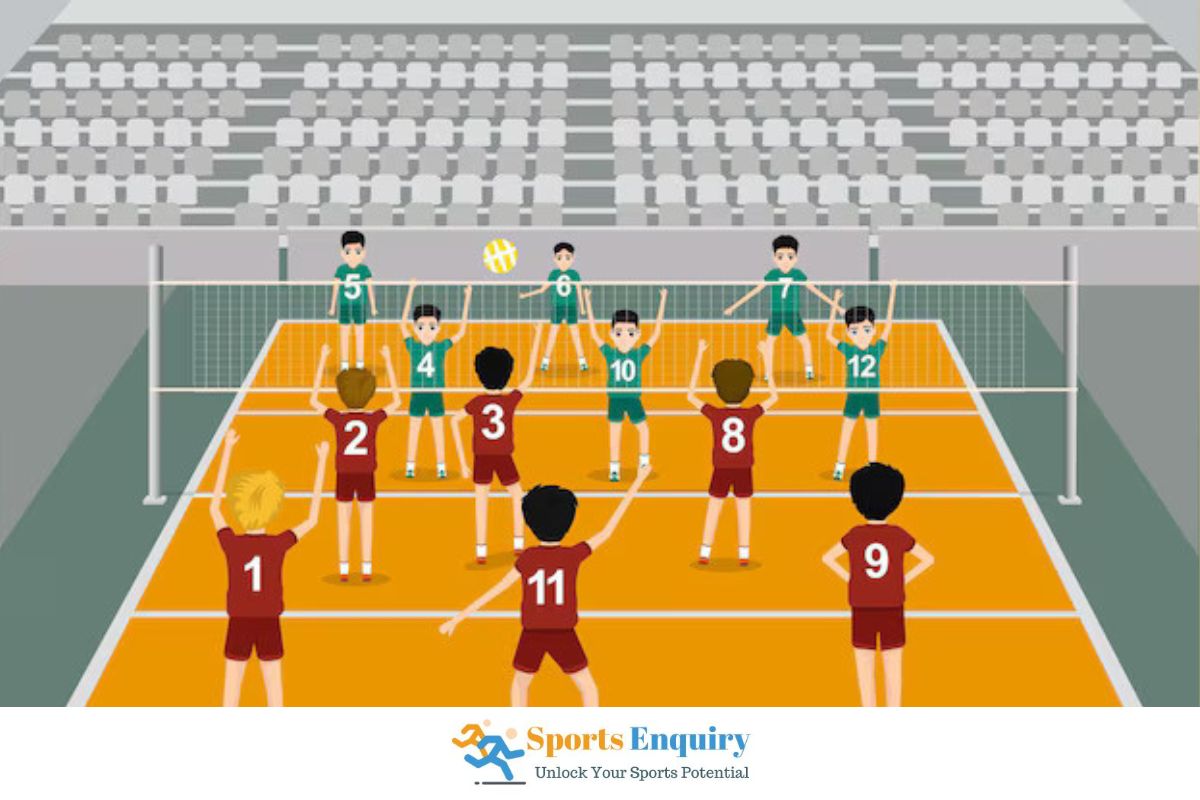
Volleyball is a popular team sport played by people of all ages. In this game, each player has a specific role on the court, known as a volleyball position. These positions help players know where to stand, what to do during a rally, and how to support their teammates. When everyone understands their role, the team plays more smoothly and scores more points.
In indoor volleyball, six players from each team are on the court at the same time. Players rotate positions during the match, but even after rotating, they continue to perform their main responsibilities, such as setting the ball, attacking, blocking, or defending. Each position requires different skills, and no single role can win a match alone.
Learning about volleyball positions is important for beginners, parents, and fans who want to understand how the game works. It also helps new players discover which position suits them best based on their skills and strengths. By understanding these roles, volleyball becomes easier to follow, more enjoyable to watch, and more fun to play.
How Volleyball Positions Work
In volleyball, each player has a specific role, but players do not stay in one fixed spot the entire game. Volleyball positions work through a rotation system that ensures fair play and equal participation.
At the start of every rally, players must stand in their correct rotational positions on the court. These positions are numbered 1 to 6 and are arranged in a clockwise order. Three players are in the front row near the net, and three players are in the back row.
When a team wins the serve from the opponent, all players rotate one position clockwise. This means players change their starting spots, but their main role stays the same. For example, a setter will continue setting the ball, and an outside hitter will continue attacking, even after rotating.
Once the serve is completed, players are free to move into their actual playing positions. Front-row players focus on attacking and blocking, while back-row players focus on defense and serve receive. This system helps the game stay organized while allowing each player to contribute using their strengths.
Volleyball Positions Explained
In volleyball, every player has a specific role on the court. These roles are called volleyball positions, and each one helps the team attack, defend, and score points. Even though players rotate during the match, they continue to perform their main position after the serve.
Below is a simple explanation of each volleyball position.
| Position | Role / Responsibilities |
| Outside Hitter (Left-Side) | Attacks from the left side, receives serves, plays front and back row, often main scorer. |
| Opposite Hitter (Right-Side) | Attacks from the right side, blocks opponent’s outside hitter, supports offense. |
| Setter | Playmaker, sets up attacks, controls offense, makes strategic decisions. |
| Middle Blocker (Middle Hitter) | Focuses on blocking opponent attacks, quick middle attacks, usually tall and fast. |
| Libero | Defensive specialist, excels at serve reception and digging, wears different-colored jersey. |
| Defensive Specialist | Back-row defense, serve reception, can rotate to front row occasionally. |
| Serving Specialist | Substituted mainly for serving, may play defense in back row. |
Outside Hitter (Left-Side Hitter)
The Outside Hitter, also called the Left-Side Hitter, is one of the most important players on a volleyball team. They are usually the team’s main attacker and score many points by hitting the ball from the left side of the court. Outside hitters play both in the front and back rows. In the front row, they focus on attacking the ball and blocking the opponent’s attacks. In the back row, they help with receiving serves, digging opponent hits, and supporting the team in setting up plays. A good outside hitter needs to be versatile, athletic, and skilled in hitting, passing, and defending. They often handle pressure situations and are relied upon to perform consistently during the game.
Opposite Hitter (Right-Side Hitter)
The Opposite Hitter, also called the Right-Side Hitter, plays on the right side of the court opposite the setter. Their main job is to attack the ball and score points, often facing the opponent’s strongest blockers. They also help block the opponent’s outside hitters and support the team’s defense at the net. Opposite hitters usually do not focus much on receiving serves, so they can concentrate on attacking and blocking. They need to be strong, athletic, and able to jump high. Opposite hitters are important because they balance the team’s offense and create scoring opportunities from the right side of the court.
Setter
The Setter is like the team’s leader on the court. Their main job is to pass the ball to the attackers in the best way so the team can score points. Setters make quick decisions during the game and decide which player should hit the ball. They also help organize the team’s plays and make sure everyone is in the right position. A good setter needs to be fast, alert, and able to think quickly. They are very important because the team’s attacks depend on how well the setter sets the ball.
Middle Blocker (Middle Hitter)
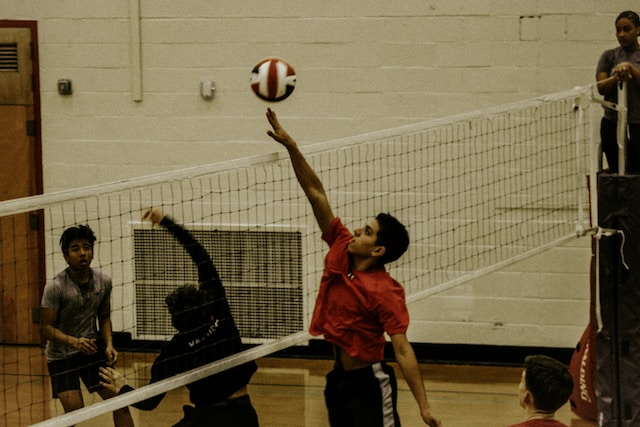
The Middle Blocker, also called the Middle Hitter, plays in the center of the net. Their main job is to block the opponent’s attacks and stop the ball from coming to their side. They also perform quick attacks near the net to help their team score points. Middle blockers need to be tall, fast, and able to jump high. They are important because they protect the team from strong hits and help create chances to score with quick attacks.
Libero
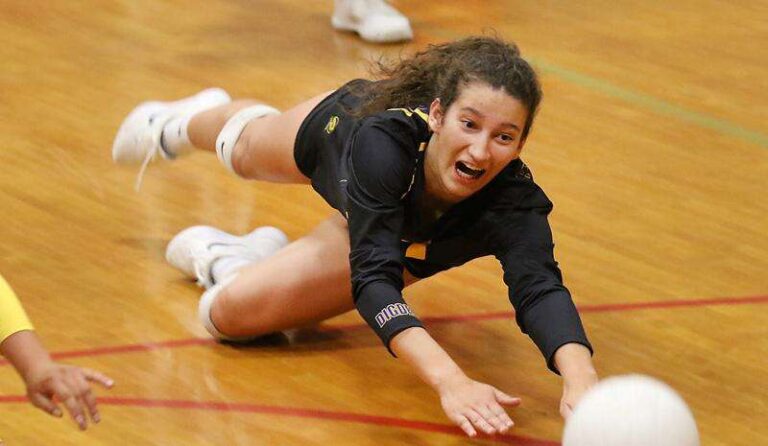
The Libero is a defensive specialist who plays in the back row and wears a different-colored jersey. Their main job is to receive serves, dig the opponent’s attacks, and keep the ball in play for their team. Liberos are not allowed to attack the ball from the front row, so they focus completely on defense and ball control. They need to be quick, agile, and have fast reflexes to react to strong hits. They are important because they help the team stay in rallies, make it easier for hitters to score, and strengthen the overall defense.
Defensive Specialist
The Defensive Specialist plays mostly in the back row and focuses on improving the team’s defense. Their main job is to receive serves, dig opponent attacks, and keep the ball in play. Unlike the libero, they can also rotate to the front row if needed. Defensive specialists need to be quick, alert, and good at reading the opponent’s plays. They are important because they help the team stay in long rallies, support the hitters, and make it easier to score points.
Serving Specialist
The Serving Specialist is a player who usually comes into the game for a specific rotation when the team needs a strong or strategic serve. They typically enter the back row to replace another player, often someone who is not as strong at serving. Their main focus is to deliver powerful or well-placed serves that make it difficult for the opponent to start their attack. After serving, the Serving Specialist may stay in the back row to help with defense or be substituted out depending on the team’s strategy. Unlike other positions like Setter or Middle Blocker, the Serving Specialist does not have a fixed spot on the court and is used mainly for their serving skills to give the team an advantage.
Why Volleyball Positions Are Important
Volleyball positions are important because each player has a specific role that helps the team work together and perform better. Every position, like setter, hitter, or libero, has different responsibilities in attacking, defending, or controlling the game. By knowing their position, players can focus on what they do best, cover the court effectively, and support their teammates. Positions also help the team stay organized during fast rallies, make strategies easier, and improve chances of winning points. Without clear positions, players could get confused, leave gaps on the court, and struggle to play as a team.
Volleyball Positions and Rotations
In volleyball, positions and rotations work together to keep the game fair and organized. While each player has a main role, players must rotate to different spots on the court during the match.
At the start of every rally, players stand in six rotational positions, numbered 1 to 6. These positions are arranged in a clockwise order, with three players in the front row and three players in the back row.
When a team wins the serve from the opponent, all players rotate one position clockwise. This means every player moves to a new starting spot on the court. However, after the serve, players can move freely and return to their actual playing roles, such as setter, outside hitter, or middle blocker.
Rotation rules apply only at the moment of the serve. Once the ball is in play, front-row players focus on attacking and blocking, while back-row players focus on defense and serve receive. Back-row players are not allowed to block or attack the ball above the net.
Common rotation systems include:
- 5-1 rotation where one setter runs the offense
- 6-2 rotation where two setters share setting duties
Skills Needed for Each Volleyball Position
Each volleyball position requires a different set of skills. Some players focus on attacking, while others specialize in defense or setting the ball. Knowing the skills needed for each position helps players understand their role and choose the position that suits them best.
| Volleyball Position | Main Role | Key Skills Needed |
| Setter | Playmaker and leader | Ball control, quick decision-making, communication, hand accuracy |
| Outside Hitter | Main attacker and defender | Strong hitting, passing, stamina, jumping ability |
| Opposite Hitter | Right-side attacker and blocker | Power, blocking skills, fast reactions, court awareness |
| Middle Blocker | Net defense and quick attacks | Timing, jumping, speed, hand positioning |
| Libero | Defensive specialist | Passing accuracy, digging, quick reflexes, anticipation |
| Defensive Specialist | Back-row defense | Serve receive, positioning, consistency, ball control |
| Serving Specialist | Tactical serving | Strong and accurate serving, focus, mental toughness |
How to Choose a Volleyball Position
Choosing the right volleyball position depends on your skills, physical strengths, and playing style. There is no perfect position for everyone, and many players try different roles before finding the one that suits them best.
Understanding your strengths will help you enjoy the game more and perform better on the court.
Factors to Consider When Choosing a Volleyball Position
| Factor | What to Look For | Suitable Positions |
| Height | Taller players with good reach | Middle blocker, opposite hitter |
| Jumping Ability | Strong vertical jump | Outside hitter, middle blocker |
| Speed & Agility | Quick movement and reactions | Libero, defensive specialist |
| Ball Control | Accurate passing and setting | Setter, libero |
| Power | Strong arm and hitting ability | Outside hitter, opposite hitter |
| Communication | Leadership and awareness | Setter |
Conclusion
Volleyball positions play an important role in how the game is played. Each position has its own responsibilities, from attacking and blocking to passing and defending. When players understand their roles, the team plays with better coordination and confidence.
Learning about volleyball positions and rotations helps beginners follow the rules, avoid mistakes, and enjoy the game more. Whether you are a new player, a parent, or a fan, knowing these positions makes volleyball easier to understand and more exciting to watch. With practice and teamwork, every position contributes to the success of the team.
Related Searches
- Beach Volleyball Court Dimensions and Specifications
- Can You Kick the Ball in Volleyball?
- What Is an Ace in Volleyball?
- Can You Touch the Net in Volleyball?
- How many sets are in a volleyball game?
- Volleyball Team Name: Funny, Creative and Unique
- How Many Players On A Volleyball Team ?
I’m James Ritter, a sports enthusiast. I’ve played sports since school, and now I enjoy writing about them. My goal is to inspire aspiring athletes through stories of success and determination. I believe anyone can achieve greatness with the right guidance. I aim to make a positive impact on the sports community by sharing stories and insights, connecting my love for sports and writing. Join me on this journey of inspiration for all sports lovers.