Which Teams Have Qualified for the FIFA World Cup 2026?
The FIFA World Cup 2026 is set to be one of the biggest and most exciting football tournaments in history, as it will feature 48 teams for the first time instead of the usual 32. This change means more countries will get the opportunity to take part, making the competition more global and inclusive.
With more teams and more matches, the tournament is expected to be even more competitive and entertaining for fans around the world. Every match will be important, and fans can expect more excitement and memorable moments throughout the event.
So far, only a few teams have officially qualified for the tournament, including the host nations that secured their place automatically. More teams will continue to be added to the list as qualification results are confirmed.
In this article, you will find a simple and easy explanation of the teams that have qualified so far, along with useful details to help you stay updated with the latest information.
Host Countries (Qualified Automatically)
For the FIFA World Cup 2026, three countries have been selected as hosts, and they have automatically qualified for the tournament. This means they do not need to play qualification matches and are directly included in the competition.
The host nations are the United States, Canada, and Mexico. This is the first time in history that the FIFA World Cup will be hosted by three countries together, making it a unique and special event.
These teams will represent their regions on home soil, and fans can expect strong performances from them as they prepare to compete in front of their home crowd.
Total Number of Teams in FIFA World Cup 2026
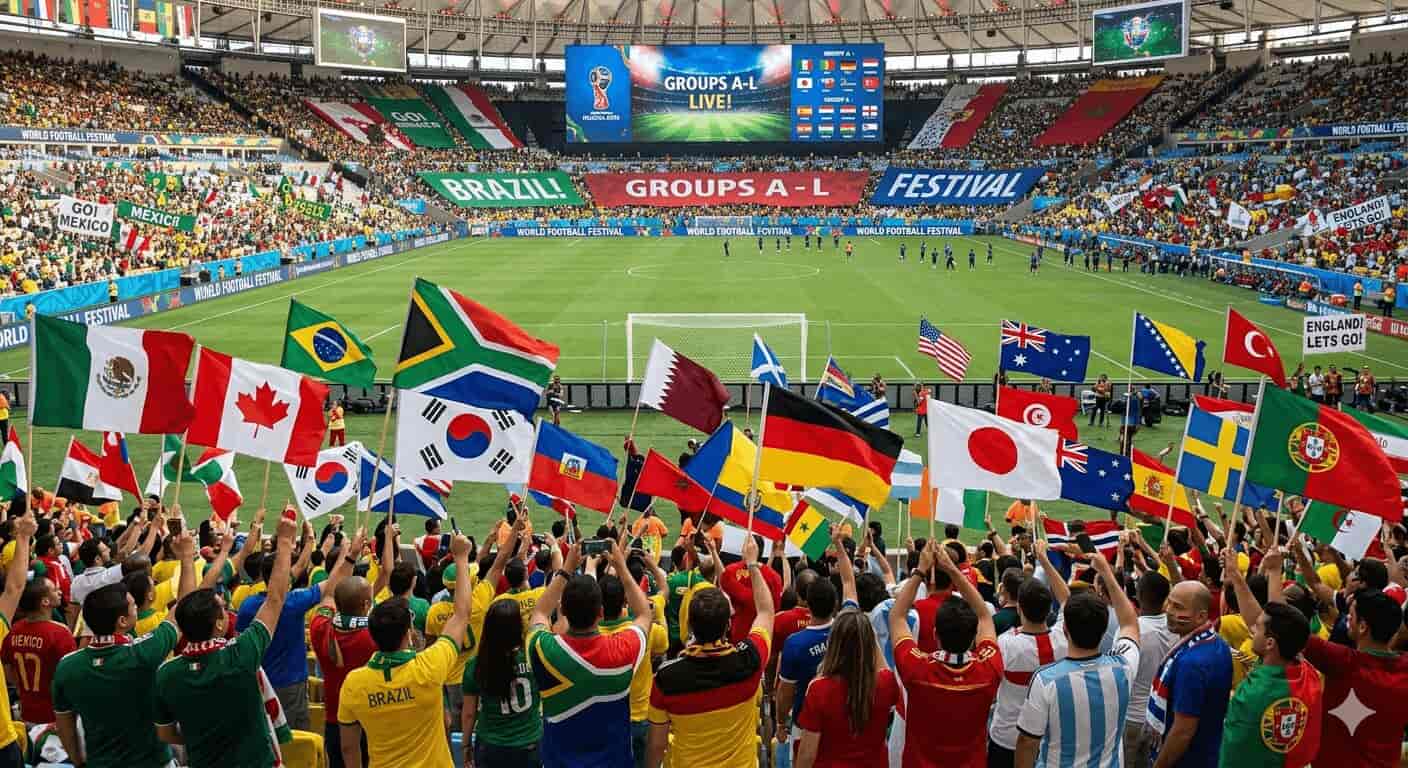
The FIFA World Cup 2026 will feature a total of 48 teams, making it the largest tournament in football history. This is a big increase from the previous 32-team format, giving more countries the chance to qualify and compete on the world stage.
The 48 spots are divided among different football regions (confederations) to ensure fair representation from around the world. Each region gets a fixed number of direct qualification spots, along with a few additional places decided through playoff matches.
This new format not only increases opportunities for smaller nations but also makes the tournament more exciting, with more matches, more teams, and a wider global presence than ever before.
List of Qualified Teams in the FIFA World Cup 2026
The table below shows the list of teams that have officially qualified for the FIFA World Cup 2026, along with their serial numbers and respective football confederations. This format makes it easy to quickly identify each team and understand which region they belong to.
As the tournament expands to 48 teams, this list highlights the nations that have successfully secured their place on the global stage. It also gives a clear overview of how different continents are represented, helping fans stay updated with all the qualified teams in a simple and organized way.
| Sr. No. | Team | Confederation |
| 1 | Canada | Hosts (CONCACAF) |
| 2 | Mexico | Hosts (CONCACAF) |
| 3 | United States | Hosts (CONCACAF) |
| 4 | Japan | AFC |
| 5 | IR Iran | AFC |
| 6 | Uzbekistan | AFC |
| 7 | Korea Republic | AFC |
| 8 | Jordan | AFC |
| 9 | Australia | AFC |
| 10 | Saudi Arabia | AFC |
| 11 | Qatar | AFC |
| 12 | Iraq | AFC |
| 13 | Argentina | CONMEBOL |
| 14 | Brazil | CONMEBOL |
| 15 | Uruguay | CONMEBOL |
| 16 | Paraguay | CONMEBOL |
| 17 | Colombia | CONMEBOL |
| 18 | Ecuador | CONMEBOL |
| 19 | England | UEFA |
| 20 | France | UEFA |
| 21 | Germany | UEFA |
| 22 | Spain | UEFA |
| 23 | Portugal | UEFA |
| 24 | Netherlands | UEFA |
| 25 | Belgium | UEFA |
| 26 | Croatia | UEFA |
| 27 | Switzerland | UEFA |
| 28 | Austria | UEFA |
| 29 | Norway | UEFA |
| 30 | Scotland | UEFA |
| 31 | Sweden | UEFA |
| 32 | Türkiye | UEFA |
| 33 | Czechia | UEFA |
| 34 | Bosnia and Herzegovina | UEFA |
| 35 | Morocco | CAF |
| 36 | Tunisia | CAF |
| 37 | Egypt | CAF |
| 38 | Algeria | CAF |
| 39 | Ghana | CAF |
| 40 | Cabo Verde | CAF |
| 41 | South Africa | CAF |
| 42 | Senegal | CAF |
| 43 | Côte d’Ivoire | CAF |
| 44 | Congo DR | CAF |
| 45 | New Zealand | OFC |
| 46 | Curaçao | CONCACAF |
| 47 | Haiti | CONCACAF |
| 48 | Panama | CONCACAF |
FIFA World Cup 2026 – Group Wise List
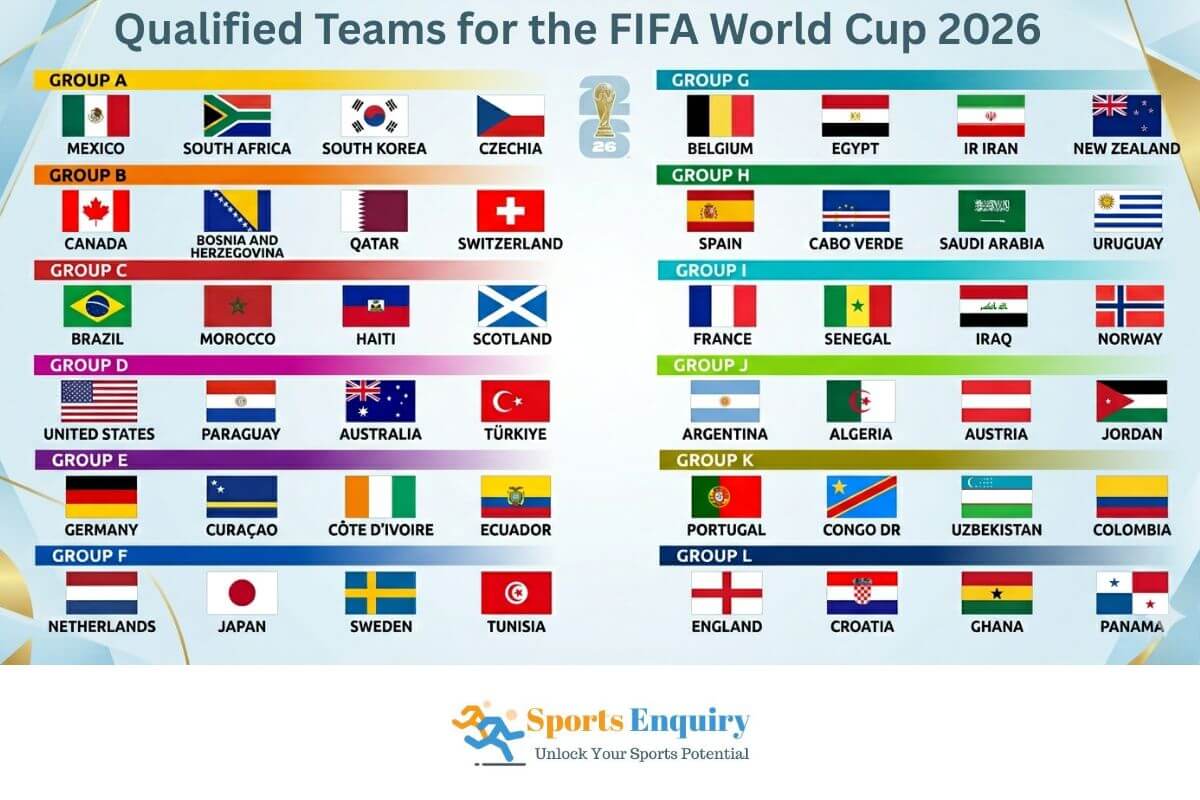
The table above presents a clear and organized view of the group stage teams for the FIFA World Cup 2026. Each group is arranged in a structured format, making it easy to read and understand the distribution of teams.
This layout helps readers quickly explore different groups and identify the teams competing in each one. Whether you are looking for your favorite team or simply reviewing the group lineup, this format provides a simple and convenient overview of the tournament.
| Group A | Group B | Group C |
| Mexico | Canada | Brazil |
| South Africa | Bosnia and Herzegovina | Morocco |
| South Korea | Qatar | Haiti |
| Czechia | Switzerland | Scotland |
| Group D | Group E | Group F |
| United States | Germany | Netherlands |
| Paraguay | Curaçao | Japan |
| Australia | Côte d’Ivoire | Sweden |
| Türkiye | Ecuador | Tunisia |
| Group G | Group H | Group I |
| Belgium | Spain | France |
| Egypt | Cabo Verde | Senegal |
| IR Iran | Saudi Arabia | Iraq |
| New Zealand | Uruguay | Norway |
| Group J | Group K | Group L |
| Argentina | Portugal | England |
| Algeria | Congo DR | Croatia |
| Austria | Uzbekistan | Ghana |
| Jordan | Colombia | Panama |
Why This FIFA World Cup is Special
The FIFA World Cup 2026 is expected to be one of the most exciting and memorable tournaments in football history. It will be the first-ever World Cup hosted by three countries, including United States, Canada, and Mexico, bringing together fans from across North America like never before.
Another major highlight is the increase in the number of teams from 32 to 48, making it the biggest World Cup ever. This expansion gives more countries a chance to participate and creates more matches, more excitement, and more opportunities for surprises.
The tournament will also introduce a new group stage format, with more groups and a longer knockout phase, adding extra drama and competition. Fans can expect thrilling matches right from the beginning as teams fight harder to progress.
Overall, the FIFA World Cup 2026 is special because it is bigger, more inclusive, and more global than ever before, promising an unforgettable experience for football lovers around the world.
Conclusion
The FIFA World Cup 2026 is shaping up to be a truly historic tournament that will bring together teams, cultures, and fans from all around the world. With three host countries, United States, Canada, and Mexico, the event will offer a unique experience across different cities and stadiums, creating a vibrant and diverse atmosphere for players and supporters alike.
The expansion to 48 teams makes this edition bigger than ever, giving more nations the chance to compete and showcase their talent on the global stage. This not only increases competition but also adds more excitement for fans, as new teams and fresh matchups can lead to surprising results and memorable performances.
As the tournament approaches, expectations continue to grow, with fans eagerly waiting to see their favorite teams compete at the highest level. The combination of a larger format, global participation, and a unique hosting setup makes this World Cup a special event that will be remembered for years to come.
FAQs – FIFA World Cup 2026
1. When will the FIFA World Cup 2026 take place?
The tournament is expected to be held in June and July 2026, following the traditional World Cup schedule.
2. Which countries are hosting the FIFA World Cup 2026?
The event will be hosted by three nations: United States, Canada, and Mexico.
3. How many teams will play in the 2026 World Cup?
A total of 48 teams will participate, making it the largest World Cup in history.
4. How many groups are there in the tournament?
There will be 12 groups, with each group consisting of four teams.
5. Which teams have qualified for the FIFA World Cup 2026?
Several teams from different continents have qualified, including top nations like Brazil, Argentina, France, and Germany.

I’m James Ritter, a sports enthusiast. I’ve played sports since school, and now I enjoy writing about them. My goal is to inspire aspiring athletes through stories of success and determination. I believe anyone can achieve greatness with the right guidance. I aim to make a positive impact on the sports community by sharing stories and insights, connecting my love for sports and writing. Join me on this journey of inspiration for all sports lovers.